We are consuming plastic without realizing it. Microplastics are found in our water and have us all worried. But what if a simple kitchen habit could significantly reduce these harmful particles in your drinking water? Scientists have just made a discovery that could change your daily life, and it's incredibly simple.
The invisible enemy hiding in your glass
It sounds alarming, but microplastics are everywhere: in the air we breathe, the food we eat, and, of course, the water we drink. These microscopic plastic fragments come from larger plastic waste breaking down – think bottles, bags, even synthetic clothing fibers. They become so tiny they are invisible to the naked eye.
The real problem is that traditional water treatment plants, even advanced ones, struggle to capture these tiny particles. Because of their minuscule size, nano and microplastics (NMP) slip through filters, enter our groundwater and rivers, and eventually end up in our taps.
Boiling water and a coffee filter: an unexpected solution
A team of researchers from Jinan University in Guangzhou, China, has found an ingenious and accessible solution. They discovered and tested a method that can drastically lower the amount of microplastic you ingest with your water. Their findings, reported in scientific media, show that simply boiling your water and then filtering it significantly reduces these dangerous particles.
In practice, it's remarkably simple: just boil water in your usual kettle or pot, and then pour it through a basic paper coffee filter or a fine tea strainer. Laboratory tests have officially confirmed that this straightforward method managed to remove up to 90% of all microplastics present in the water.
Hard water just became your best ally
One of the most surprising revelations from this study is how water properties play a role. We usually see hard water as a nuisance – it causes limescale, damages appliances, and dries out skin. However, when it comes to fighting microplastics, hard water becomes your strongest ally.
Scientists found that this boiling and filtering method is most effective with hard water, which is naturally rich in calcium and magnesium minerals. When this water heats up, a chemical reaction occurs, forming calcium carbonate crystals (commonly known as limescale). As these crystals form, they act like tiny traps, engulfing and "locking" the plastic particles, causing them to settle as hard residue at the bottom.
When you then pour this water through a coffee filter, these residues, along with the trapped microplastics, are easily separated and removed from your drink. In experiments, this "limescale trap" method removed up to 90% of microplastics from hard water. For comparison, tests with soft water, which produces fewer calcium carbonate deposits, showed only about a 25% reduction in microplastics, as reported by "Technology Networks."
Plastic reaches us from the tap and from bottles
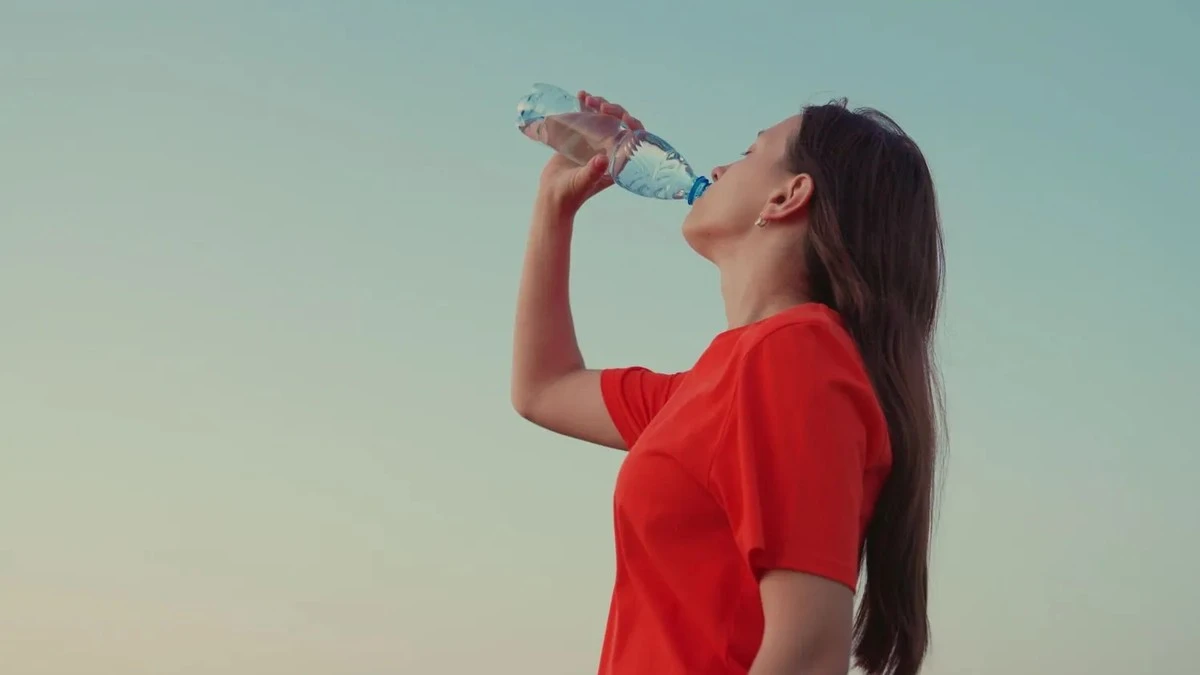
The study also highlights another crucial point: those who think drinking bottled water saves them from this problem are mistaken. In reality, microplastic is now found in large quantities in both tap water and industrially bottled water (bottled water often contains even more due to the degradation of the packaging itself).
While the long-term effects of these particles on the human body, internal organs, and cells are still under investigation, global health experts and scientists urge us not to wait for final verdicts. They recommend seeking ways to reduce daily intake now. The combination of boiling and simple filtering is, for now, the most effective, cheapest, and accessible weapon in this invisible battle.
Experts especially recommend this method in regions where tap water is hard. This will not only improve your drinking water quality but also provide peace of mind, knowing you've done everything you can to protect your health and that of your loved ones from invisible plastic pollution.